
"coffee plant growing conditions"
3000 article(s) found
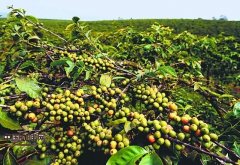
Common sense of Coffee planting requirements and conditions of Coffee trees
The origin of the coffee tree is Ethiopia in Africa. In botany, coffee trees belong to the evergreen trees of the subgenus Rubiaceae, and coffee beans, commonly known as coffee beans, are actually the seeds of the fruit of coffee trees. They are called coffee beans only because they are shaped like beans. Climate is the decisive factor for coffee cultivation. Coffee trees are only suitable for growing in the tropics or subtropics, so latitude 25 degrees south and north.

Arabica Variety Classification Guide Arabica Low Caffeine Arabica Growing Conditions
Professional coffee knowledge exchange More coffee bean information Please pay attention to coffee workshop (Weixin Official Accounts cafe_style) The same kind of Arabica coffee tree, but planted in different places, due to weather, soil and other effects, will produce completely different flavor, therefore, experts are accustomed to coffee bean flavor strong origin or important distribution center to name, such as Mantenin, Blue Mountain, etc., Mantenin refers to

A brief introduction to the History and Culture of the Origin and Development of Arabica Fine Coffee beans
Arabica? The planting conditions of coffee are harsh, requiring higher elevations (above 2000 meters above sea level), fertile soil fertility, adequate moisture, proper sunshine conditions and shade. Arabica? Coffee tree species have poor ability to resist diseases and insect pests and are easy to be damaged. In addition, the annual output of coffee trees per unit area is also lower. At the moment? Arabica? Grow coffee

How do the grading conditions of Jamaican Blue Mountain Coffee determine Jamaican Coffee outside the statutory Blue Mountain area
Professional coffee knowledge exchange more coffee bean information please follow Coffee Workshop (Wechat official account cafe_style) authentic Jamaican Blue Mountain Coffee _ the world's best Jamaican Blue Mountain Coffee beans are planted under Jamaican official law and the production process is under the strict supervision of the Jamaican Coffee Bureau. High-quality blue mountain coffee beans are balanced and gentle

The market of Rwandan coffee and the natural conditions of Luwanda coffee
Following Cafe (official Wechat account vdailycom) found that Rwanda Coffee is absolutely high quality in terms of its washed Arabica beans. As far as Africa is concerned, its coffee industry is remarkable because Rwanda thrives mainly by producing the best possible coffee beans. In recent years, the Government of Rwanda has adopted

General knowledge of high-quality coffee planting requirements and conditions of coffee trees
The origin of the coffee tree is Ethiopia in Africa. In botany, coffee trees belong to the evergreen trees of the subgenus Rubiaceae, and coffee beans, commonly known as coffee beans, are actually the seeds of the fruit of coffee trees. They are called coffee beans only because they are shaped like beans. Climate is the decisive factor for coffee cultivation. Coffee trees are only suitable for growing in the tropics or subtropics, so latitude 25 degrees south and north.

Coffee producing and growing areas in Ethiopia
Ethiopian coffee beans grow in close to the natural environment, after years of planting under the same growth conditions, Ethiopian coffee beans have gradually adapted to the environment here. More than 60% of coffee beans are grown in forests or semi-forests. Large-scale coffee-growing villages account for about 35% of the country's total coffee production. Many of these are used.

The planting conditions of coffee trees the types of coffee trees
The Robastian coffee tree, which originated in the Congo in Africa, accounts for about 20% of the world's production. 30%. Robasta coffee tree is suitable for planting in the lowlands below 500 meters above sea level, has strong adaptability to the environment, can resist bad climate, resist diseases and insect pests, and does not need much manual care during soil preparation, weeding and pruning, and can be allowed to grow in the wild. It is easy to cultivate.

Description of name and Flavor of Coffee growing area in Yunnan
Yunnan coffee growing area name flavor description taste treatment variety production area introduction planting area has greatly increased, but there is an extreme lack of professionals, technology and equipment. This is the pain caused by the great strides of Yunnan coffee industry. It's not easy to see coffee trees in Yunnan. To ensure the safety and efficiency of your trip, you need an SUV and a mountain road that can be in two lanes.

Cuban Crystal Mountain Coffee flavor and taste, Cuban Crystal Mountain Coffee planting conditions
Following Cafe Review (Wechat official account vdailycom) found that the beautiful cafe opened its own shop, Cuban Crystal Mountain Coffee (Cubita Coffee), which has a slightly wine-like bitterness and a hint of sweetness, and even a hint of tobacco, delicate and smooth, refreshing and elegant, almost perfect. Known as the noble and elegant princess in coffee. General coffee tastes like heavy metal

Because of the best growing conditions in the world, Blue Mountain Coffee
The most favorable planting conditions in the world Jamaica's weather, geological structure and topography together provide a unique ideal place. The designated Jamaican Blue Mountain Coffee can only be grown in the Blue Mountain area, north-east of the island of Jamaica in Kingston. Coffee grows on the highest mountain of 1800 meters (about 6000 feet), which is already quite high for small-grain coffee, and

Common sense of Coffee the basic environmental conditions of planting coffee trees
Coffee belt: coffee can not be grown in any environment, because it is originally a plant growing in a tropical rain forest, and in phylogeny, it forms the habit of requiring calm wind, cool, shaded or semi-shaded and humid environment. We call the strips on both sides of the equator between latitudes 25 degrees south and north suitable for the growth of coffee trees as coffee belts. Temperature: the requirement for temperature varies with the species of cultivation, small
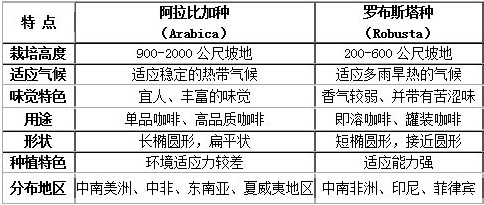
What's the difference between Arabica coffee beans and Roberta coffee beans? Arabica Coffee Tree Robbas
Different planting conditions [Elaraby Kadou] Arabica coffee has more stringent planting conditions, weak disease resistance, higher altitude requirements, slower growth, higher quality, and more refined processing of raw beans. Growing at colder altitudes in the tropics, it is an important kind of commercial coffee with a fruiting period of less than three years and a high-quality aroma and sour taste. Arabica coffee bean owner

Fine Coffee the planting requirements and conditions of Coffee trees
The origin of the coffee tree is Ethiopia in Africa. In botany, coffee trees belong to the evergreen trees of the subgenus Rubiaceae, and coffee beans, commonly known as coffee beans, are actually the seeds of the fruit of coffee trees. They are called coffee beans only because they are shaped like beans. Climate is the decisive factor for coffee cultivation. Coffee trees are only suitable for growing in the tropics or subtropics, so latitude 25 degrees south and north.

What kind of coffee beans are just planted?
The traditional cappuccino / Cappuccino coffee is 1/3 espresso, 1/3 steamed milk and 1/3 foamy milk. Cappuccinos are divided into dry and wet ones. Dry cappuccino (Dry Cappuccino) refers to the conditioning method with more milk bubbles and less milk, and the coffee tastes stronger than milk flavor. Wet cappuccino (Wet Cappuccino) refers to less milk foam, cow

Basic knowledge of Coffee planting requirements and conditions of Coffee trees
The origin of the coffee tree is Ethiopia in Africa. In botany, coffee trees belong to the evergreen trees of the subgenus Rubiaceae, and coffee beans, commonly known as coffee beans, are actually the seeds of the fruit of coffee trees. They are called coffee beans only because they are shaped like beans. Climate is the decisive factor for coffee cultivation. Coffee trees are only suitable for growing in the tropics or subtropics, so latitude 25 degrees south and north.

Robusta coffee beans and Arabica flavor difference which robusta coffee beans are the best?
Professional coffee knowledge exchange more coffee bean information Please follow the coffee workshop (Wechat official account cafe_style) Coffee bean ingredients include caffeine, tannin, fat, protein, sugar (carbohydrates), minerals and so on. The sugar in coffee beans brings sweetness, tannins and fatty acids bring sour taste, volatile fat brings aroma, and caffeine bitterness. The coffee is big

What are the local conditions? How is coffee naturally affected by climate, soil, etc.?
We often hear the word "local conditions" when we talk about coffee, but what exactly does it mean? Does it have anything to do with the flavor of coffee? Why do we need to care about the local environment? The author interviewed some people in the coffee and wine industries and asked them to tell you what was going on in the country. What are the local conditions? The word vernacular conditions comes from the French Terroir, which is most commonly used when talking about wine.
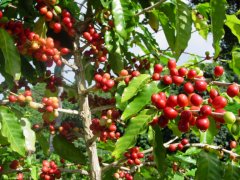
Coffee planting technology to share the growth process and planting conditions of coffee the life span of coffee trees is only …
Professional coffee knowledge exchange more coffee bean information please follow the coffee workshop (Wechat official account cafe_style) A coffee tree bears fruit several times a year. This time, we would like to introduce the whole process of coffee beans from planting to picking, so that we can fully understand the process of coffee beans from scratch. The growth process of coffee is from seeds (or cuttings, grafting) at the seedling stage.

Coffee knowledge: the Environmental cycle process of Natural conditions for Coffee growth
Professional coffee knowledge exchange more coffee bean information please pay attention to the coffee workshop (Wechat official account cafe_style) Coffee planting conditions temperature between 1500mm and 25mm climate, and the annual rainfall must reach 1500mm to 2000mm at the same time, to be able to match the flowering cycle of coffee trees, of course, in addition to the seasonal rainfall, there is also fertile soil.